
Key Takeaway
Peptide therapy marketing is moving from simple lead generation to trust building. Wellness businesses that educate carefully, avoid loose medical claims, and show the real humans behind the clinic will earn better consultations than brands that only run ads.
Peptide therapy marketing has a strange problem right now. Interest is climbing, social feeds are full of confident claims, and wellness customers are trying to sort real clinical guidance from hype. That creates opportunity for medical wellness clinics, med spas, longevity brands, and hormone-adjacent operators, but it also raises the stakes.
The winning clinic is not the one with the loudest ad. It is the one that can explain the category in plain English, show responsible decision making, and make a cautious prospect feel like they are talking to a professional instead of a landing page.
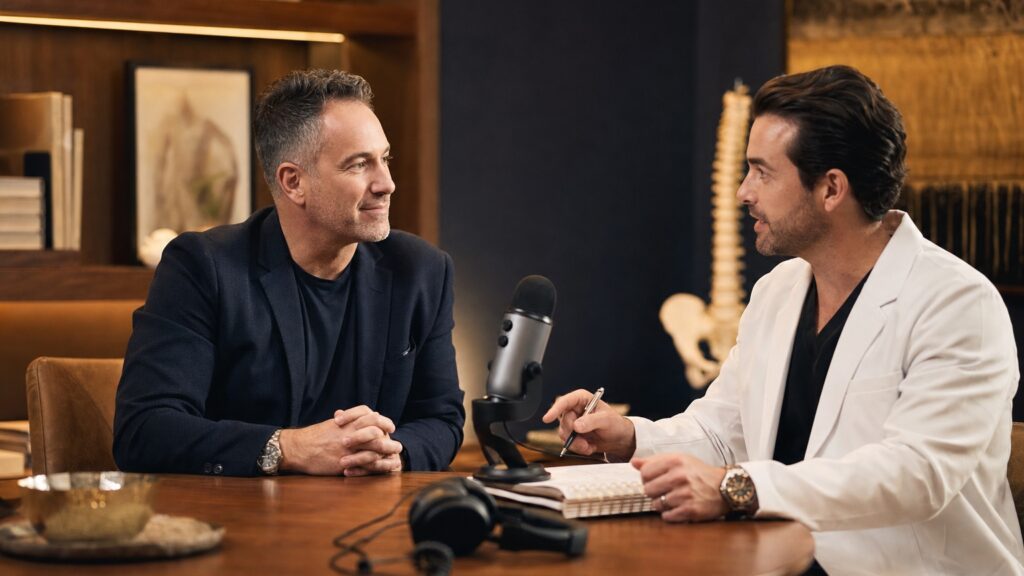
That is where podcasting and branded media fit. Not as a gimmick. Not as a replacement for clinical judgment. As a practical way to turn complicated patient questions into reusable trust assets.
Listen to The Pod Bros Playbook
Get weekly insights on authority-building audio content for service professionals.
Browse EpisodesWhy Peptide Demand Creates a Trust Gap
Peptides sit inside a broader medical wellness conversation that includes recovery, body composition, healthy aging, hormones, performance, GLP-1 adjacent care, and longevity. Some prospects arrive with thoughtful questions. Others arrive with a TikTok clip, a friend’s result story, or a vague feeling that something might help them feel better.
That is not a simple marketing funnel. It is an education funnel.
Industry operators are already writing about the same challenge. OpenLoop Health described peptide therapy as a category where many patients are searching around symptoms and goals before they fully understand the treatment language. Their guidance is blunt: lead with the patient’s question, not the product pitch. That is a useful frame for clinics that want better conversations instead of low-quality form fills.
The real business pain is that high-intent prospects often stall before they book. They wonder whether the offer is legitimate, whether the provider is qualified, whether the claims are exaggerated, what the consultation includes, how monitoring works, and whether this clinic is different from every aggressive wellness ad they have seen.
For clinic owners: the first conversion is not the sale. The first conversion is confidence. If the prospect does not trust how you explain the category, they will not trust your intake process.
This is especially true in Arizona markets like Scottsdale and Phoenix, where affluent wellness buyers have options. They can compare concierge practices, med spas, telehealth brands, hormone clinics, and longevity programs in a single afternoon. If your public content sounds thin, generic, or overly promotional, you are making the competitor’s intake team look better.
Why Claims Are the Danger Zone
Medical wellness marketing cannot be treated like ordinary lifestyle marketing. Health-related claims require discipline. The FTC Health Products Compliance Guidance says advertising must be truthful, not misleading, and supported before it is shared. It also notes that advertising can include websites, social media, interviews, seminars, influencer content, and claims made through intermediaries.
That matters because a podcast episode, a clinic FAQ video, a provider interview, and a short-form clip can all create claim risk if the message overpromises. A casual phrase like “this fixes fatigue” can do more damage than a carefully written landing page, especially when it gets clipped and shared without context.
The FDA has also kept pressure on direct-to-consumer messaging around compounded GLP-1 products. In March 2026, the agency announced warning letters to 30 telehealth companies over allegedly false or misleading claims. The same page emphasizes that compounded drugs are not FDA-approved and are not the same as generic drugs.
That does not mean wellness clinics should go silent. Silence creates its own risk. If responsible operators do not explain the category, the search results and social feeds get filled by people who will.
The safest voice in a noisy category is often the clearest one, not the quietest one.
Good peptide therapy marketing is not about making bigger promises. It is about creating a library of careful explanations that help prospects ask better questions before the consultation.
Patient Education Beats Pitch-Heavy Ads
Most clinics know they need content, but many default to the least useful version of it. A carousel with generic wellness tips. A reel with stock footage. A testimonial that sounds impressive but lacks context. A blog post that reads like every other AI-generated health article.
Those assets might create motion, but they rarely create trust.
A better system starts with the questions real prospects ask before they book:
- What is peptide therapy, in plain English?
- What kinds of goals lead someone to ask about it?
- What happens during the first consultation?
- What labs, history, or provider review may be involved?
- What should patients be cautious about when comparing providers?
- What claims should make them slow down and ask more questions?
Those questions are perfect for conversation-based content. A provider can answer them with nuance. A founder can explain the clinic’s philosophy. A care coordinator can describe what a patient should expect. A short clip can pull out one clean point, while the full conversation gives context to people who are seriously considering a consult.
This is also why clinics should connect education content to the broader business system. A thoughtful podcast episode can become a blog article, email nurture, intake follow-up, paid retargeting asset, and consultation prep link. It does not die after one social post.
How a Podcast Gives Clinics a Safer Voice
A podcast works for medical wellness because it slows the conversation down. Instead of cramming a complicated category into a fifteen second pitch, the clinic can build a repeatable education rhythm.
That rhythm might include episodes like:
- “What patients should ask before starting a peptide consultation”
- “Why wellness programs should begin with goals, history, and provider review”
- “How to compare a responsible clinic with a hype-driven offer”
- “What monitoring means in a medical wellness program”
- “Why patient education matters before any treatment conversation”
Notice what those topics do. They do not promise outcomes. They do not turn a treatment category into a miracle. They position the clinic as the calm expert in the room.
That is valuable for search, too. A clinic with detailed educational pages gives Google, referral partners, and AI answer systems more context about the business. It also gives prospects something to send to a spouse, business partner, or friend when they are trying to decide whether to book.
The branded media advantage: one recorded conversation can become a long-form blog article, YouTube description, email sequence, social clips, FAQ snippets, and consultation follow-up content. The clinic gets consistency without forcing the owner to write every week.
This is the same reason authority-based firms in other industries are using proof content. Coaches need to explain results carefully. CPAs need to make tax changes understandable. Advisors need to show their communication philosophy. Medical wellness businesses need to do all of that while staying even more disciplined about health claims.
If you want a deeper example of the proof-content trend, read our article on why FTC earnings claim pressure is changing coach content. Different industry, same pattern: public trust now belongs to the businesses that can explain their value without getting sloppy.
A Scottsdale Content System for Wellness Brands
Pod Bros Media builds podcast and video systems for businesses that need trust before conversion. For a medical wellness clinic, that means the goal is not just “start a podcast.” The goal is a repeatable education engine that supports consults, referral trust, local SEO, and owner authority.
Our studio is at 7555 E Osborn Rd, Suite 203, Scottsdale, AZ 85251, close to Old Town Scottsdale and built for founders, firms, and professional service operators who want the finished content without the tech headaches. If a wellness brand serves Scottsdale, Phoenix, or the broader Arizona market, that local presence matters. Prospects like seeing there are real people, a real place, and a real production standard behind the message.
The system is simple. We help choose topics, record the conversation, produce the episode, create short clips, write supporting content, and publish assets that can live across the website, email, and social channels. You can see the broader production model on our podcast production services page and the working rhythm on our Pod Bros production process page.
For local teams, the environment helps too. A polished recording from an Old Town Scottsdale studio feels different from a webcam call in a noisy office. That quality sends a signal before a single word is spoken.
The Clinic Playbook to Start This Month
If you run a peptide, longevity, hormone, med spa, or medical wellness business, do not start by brainstorming viral hooks. Start by collecting the questions your best prospects ask before they trust you.
Then build the first month of content around four simple themes:
- Category clarity: explain what the service is and what it is not.
- Consultation clarity: explain what happens before any recommendation is made.
- Safety and expectations: explain how responsible providers think about fit, monitoring, and follow-up.
- Buyer education: explain how to compare clinics without falling for hype.
This first batch can become four podcast episodes, four blog articles, eight to twelve short clips, and a simple email sequence for people who are interested but not ready to book. It also gives your intake team something useful to send after a prospect asks, “Can I learn more before scheduling?”
Do this before you buy more ads: create one educational asset that answers the top five questions your staff hears every week. If that asset makes consults easier, you have found the first pillar of your content system.
Peptide therapy marketing will keep getting more competitive. The clinics that win will not be the ones that shout the biggest claims. They will be the ones that show up with a calm, credible voice and make the buyer feel smarter before they ever fill out a form.
Want a trust-building content system for your wellness clinic?
If you are building a medical wellness brand in Scottsdale, Phoenix, or anywhere in Arizona, Pod Bros Media can help you turn patient education into polished podcast, video, and blog content.
Book a Free SessionOr start at podbrosmedia.com/free-session/ and tell us what your clinic is trying to explain better.
Peptide Therapy Marketing FAQ
What makes peptide therapy marketing different from regular wellness marketing?
Peptide therapy marketing has to educate before it converts. Many prospects are curious about energy, recovery, hormones, weight management, or longevity, but they do not understand the category or the compliance limits around medical claims.
Can a wellness clinic use podcasting without making risky claims?
Yes. The safer lane is educational content that explains process, patient questions, provider philosophy, consultation expectations, and decision criteria without promising outcomes or implying unsupported treatment claims.
Why is trust such a big issue for peptide clinics in 2026?
Demand is rising, social media chatter is noisy, and regulators are scrutinizing health claims. Clinics that sound thoughtful, careful, and transparent stand out from ad-heavy operators.
What should a peptide clinic talk about on a podcast?
Good topics include what peptides are, how consultations work, what questions patients should ask, how programs are monitored, how wellness goals are evaluated, and what responsible education looks like.
How does Pod Bros Media help medical wellness businesses?
Pod Bros Media builds a done-for-you podcast and video system for service businesses, including topic planning, studio production, editing, clips, and publishing support from its Scottsdale studio.
Where is Pod Bros Media located?
Pod Bros Media works from 7555 E Osborn Rd, Suite 203, Scottsdale, AZ 85251 and serves founders, firms, and wellness businesses across Scottsdale, Phoenix, and Arizona.