
Key Takeaway
Law firm marketing is shifting from simple visibility to proof of judgment. A podcast-backed content system gives prospects, referral partners, search engines, and AI answer tools something human to evaluate before the first consultation.
Listen to This Article
The Pod Bros Playbook • Episode 53 • 06:11
Also available on The Pod Bros Playbook podcast feed
Law firm marketing used to reward the firm that showed up first, looked polished, and had enough budget to stay visible. That still helps, but it is no longer the whole game. In 2026, prospects are using voice search, AI answer tools, reviews, referral checks, short video, and website content together. They are not just asking, “Who can I hire?” They are asking, “Who can I trust with a serious problem?”
That makes the attorney’s human presence more valuable, not less. A firm can publish hundreds of pages that technically mention every practice area. A prospect still may not know how the lawyers think, how they explain risk, or whether the firm can make a complex situation feel manageable. Human signals fill that gap.
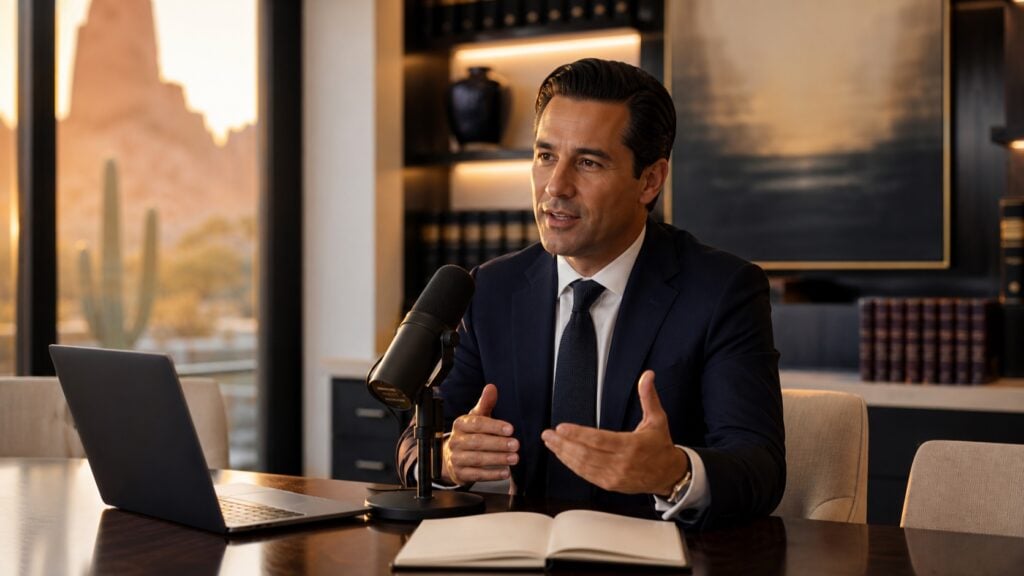
For Pod Bros Media clients, the answer is not random posting. It is a repeatable authority system built from real conversations. A podcast episode gives the market the one thing generic marketing copy struggles to prove: the judgment and voice of the professional.
Why law firm marketing changed
The change starts with how people search. A potential client can now ask a phone a full legal question, read an AI generated summary, scan a few firm websites, check reviews, and watch a short clip before making contact. That journey is messier than a traditional search result page, but it is also more revealing.
Attorney at Work’s 2026 law firm marketing trends highlights voice search, AI assisted search, data privacy, video, immediate answers, and stronger content as major shifts for firms. Those are different channels, but they all point to the same buyer behavior. Prospects expect useful answers earlier.
That expectation matters because legal services are high stakes. A business owner facing a contract dispute, a family considering divorce, or an injured driver dealing with an insurer may not be ready to call immediately. They want to understand the situation first. They want to hear how a lawyer frames the problem. They want to know whether the firm sounds careful, clear, and credible.
For law firms: the first impression often happens before the intake call. Your content needs to answer real client questions in a way that feels specific enough to trust and careful enough to respect the profession.
What human signals actually mean
A human signal is any piece of content that proves there is a thoughtful professional behind the website. It is not a slogan. It is not a stock photo of a courthouse. It is not a paragraph that says the firm is experienced, aggressive, and client-focused.
Human signals sound like a lawyer explaining how clients commonly misunderstand a claim. They look like a short clip where an attorney walks through the first questions asked during a consultation. They show up in a podcast episode where a partner explains why timing matters, what documents to gather, and what expectations clients should have.
For attorneys, those signals should stay grounded. ABA Model Rule 7.1 focuses on avoiding false or misleading communications about a lawyer’s services. That is not a reason to be invisible. It is a reason to lead with education, clarity, and specificity instead of vague promises.
The broader consumer protection principle is similar. The FTC’s advertising and marketing guidance centers on truthful, substantiated claims. For a law firm, that reinforces the same practical move: educate instead of overclaiming.
The safest strong marketing for a law firm is often the most useful marketing: answer the question clearly, explain the risk honestly, and let the prospect hear how the attorney thinks.
That is why human signals are so hard for generic content to imitate. A bland article can explain that a firm handles business disputes. A recorded conversation can show how the attorney thinks about preserving leverage before a dispute escalates. One creates a keyword page. The other creates trust.
Why podcast content builds legal trust
A podcast is not magic because it is audio. It works because it captures context. Tone, pacing, examples, and judgment all carry meaning. When a lawyer speaks clearly about a common client problem, the prospect gets a preview of the relationship.
That preview is valuable for referral partners too. A CPA, financial advisor, business coach, or real estate broker may know a client needs legal help, but they do not want to make a careless referral. Sending a relevant episode is easier than saying, “Trust me, they are good.” The content does part of the proof.
Podcast content also gives your marketing team better raw material. One thoughtful episode can become a blog article, social clips, email follow-up, FAQ answers, and snippets for intake. Instead of forcing the firm to invent content from scratch every week, the firm records the conversations clients already need.
Think recorded answer library: every episode should answer a question your best prospects already ask. If the question comes up in intake, consults, or referral conversations, it is probably content worth recording.
A simple law firm content system
The strongest law firm content system starts with client questions, not platform trends. Make a list of the questions your intake team hears every week. Add the questions referral partners ask before sending someone over. Add the questions that would make a consultation smoother if the prospect already understood the basics.
Then record short, focused conversations around those questions. A good episode does not need to cover everything. It needs one clear promise. For example, “What should a founder do before signing a partnership agreement?” or “What should a parent understand before a custody modification consult?” or “What happens after an insurer offers a fast settlement?”
From there, turn each episode into assets. Publish the full episode. Build a companion article. Clip the most useful moments. Send the article in follow-up emails. Add the best answer to a practice area FAQ. Link related topics together so search engines and AI answer tools can see topical depth.
Pod Bros Media’s production process is built around this kind of leverage. The goal is not to make lawyers become full-time creators. The goal is to turn one planned recording session into weeks of useful authority content.
Why local authority still matters
Even as AI search grows, legal trust remains local. A prospect in Scottsdale or Phoenix wants to know that a firm understands Arizona courts, Arizona business realities, Arizona families, and the local professional network. That local familiarity should be visible in the content.
That does not mean stuffing city names into every paragraph. It means using real context. A Scottsdale estate planning attorney might explain the family dynamics that come up when adult children live in different states. A Phoenix business attorney might explain what founders should document before a local deal gets complicated. A personal injury lawyer might explain what clients misunderstand after a freeway crash.
Our Scottsdale podcast studio is built for this kind of professional content. At 7555 E Osborn Rd, Suite 203, Scottsdale, AZ 85251, Pod Bros Media gives attorneys and other authority-based firms a premium recording environment without making the production feel like a tech project.
If your firm wants the done-for-you version, explore our podcast production services. The right system should make the lawyer’s voice clearer in the market, not add another complicated marketing chore.
Mistakes law firms should avoid
The first mistake is treating podcasting like a vanity channel. A law firm podcast does not need celebrity guests or viral topics. It needs useful answers that match the problems your best clients already have.
The second mistake is publishing content that sounds like everyone else. If your content could be copied onto a competitor’s site without anyone noticing, it is not creating much trust. Specific examples, process explanations, and clear points of view make the content harder to ignore.
The third mistake is skipping compliance judgment. Educational content can be confident without being careless. Avoid outcome promises, respect confidentiality, include appropriate disclaimers where needed, and keep the focus on helping prospects understand the situation.
The fourth mistake is recording without distribution. A podcast episode should not sit alone. It should support search, sales, referrals, email, and social. That is where the content starts turning conversations into clients.
Build a law firm content system that sounds human
If your firm is ready to turn client questions into podcast episodes, blog content, and short clips, Pod Bros Media can help you build the system.
Book a Free Strategy SessionLaw firm marketing in 2026 is not about shouting louder. It is about giving prospects better evidence. A podcast-backed content system helps attorneys show judgment, clarity, and calm authority before the first call. That is a human signal worth building around.
Want to see what that could look like for your firm? Book a free strategy session with Pod Bros Media and we will map the questions, topics, and recording format that make sense for your practice.
Frequently Asked Questions
What are human signals in law firm marketing?
Human signals are the proof points that show a real attorney can explain legal problems clearly. They include recorded answers, thoughtful examples, careful disclaimers, plain language, local context, and the tone a prospect hears before booking a consultation.
Why does AI search change law firm marketing?
AI search changes the client journey because prospects may see a synthesized answer before they click a law firm website. Firms with specific, useful, well structured content give search tools and prospects better evidence to evaluate.
Can lawyers use podcasts without giving legal advice online?
Yes. A law firm podcast can educate without giving individualized legal advice. The key is to answer common questions, explain process and risk, use appropriate disclaimers, avoid confidential facts, and keep claims truthful and grounded.
How often should a law firm record podcast content?
A monthly recording cadence is enough for many firms. One focused session can create a podcast episode, a blog post, short video clips, email follow-up, FAQ content, and intake support material.
Is podcasting useful for boutique law firms?
Boutique firms can benefit because their value often comes from judgment, clarity, and attorney personality. Podcast content lets prospects hear that difference before the first call.
Where does Pod Bros Media record law firm podcasts?
Pod Bros Media records professional podcast and authority content at 7555 E Osborn Rd, Suite 203, Scottsdale, AZ 85251, serving firms in Scottsdale, Phoenix, and across Arizona.