Key Takeaway
Dental AI may help a practice move faster, but it does not make patients trust the recommendation by itself. The practices that win in 2026 will pair smarter tools with clearer human explanations, consistent educational content, and a visible doctor voice patients can believe before they ever sit in the chair.
Dentists are not waiting for some far off future of AI. It is already inside the practice. Scheduling tools, imaging support, insurance verification, reception workflows, and diagnostic assistance are moving from novelty to normal. That shift can help a busy dental team move faster, but it also creates a quieter marketing problem: patients may understand that your practice uses AI before they understand how your judgment still leads the decision.
That gap matters because dental care is already an anxiety heavy buying decision. A patient is not comparing toothbrushes. They are weighing discomfort, money, trust, insurance, treatment options, and sometimes embarrassment. If the first explanation they hear comes from a search result, a forum, or an AI summary, your practice has already lost control of the frame.
For dental practices and orthodontists in Phoenix, Scottsdale, and across Arizona, the opportunity is not to brag about software. The opportunity is to become the human source patients trust when software enters the conversation. That is where recorded education, doctor led Q&A, and a simple local media system start pulling real weight.
Why AI Changes Dental Trust
The American Dental Association Health Policy Institute reported in July 2026 that 43.3 percent of responding dentists were already using AI for at least one task, with another 26.4 percent planning to do so. The same data showed dentists using AI for appointments, imaging and diagnostics, explaining findings to patients, insurance verification, business analytics, social media, and front desk check in.
That is a huge operational shift. It also changes what a patient needs to hear. If your website says you use advanced technology but never explains what the dentist actually reviews, patients can fill in the blanks with whatever they find elsewhere. Some will assume AI makes the practice more precise. Others will worry that the practice is automating care to move patients through faster. Both reactions are possible because the tool is not the message.
The message has to come from the doctor. It has to sound like a person, not a compliance paragraph. Patients want to know: What does the tool help you see? What does it not decide? When do you slow down and use clinical judgment? How do you explain uncertainty? What should a patient ask before accepting a treatment plan?
The trust problem is not AI adoption. The trust problem is silent adoption. If a patient hears about the technology but never hears the dentist explain it, the practice gives up the most valuable part of the story.
Patients Still Need Human Judgment
Dental marketing often treats patient acquisition like a traffic problem. More search traffic. More ads. More review requests. Those channels matter, but the deeper issue is confidence. The CDC notes that one in five adults aged 20 to 64 has at least one untreated cavity, and oral disease creates pain, infection risk, missed work, and major economic costs. Many people do not delay care because they love delay. They delay because the decision feels expensive, confusing, or low trust.
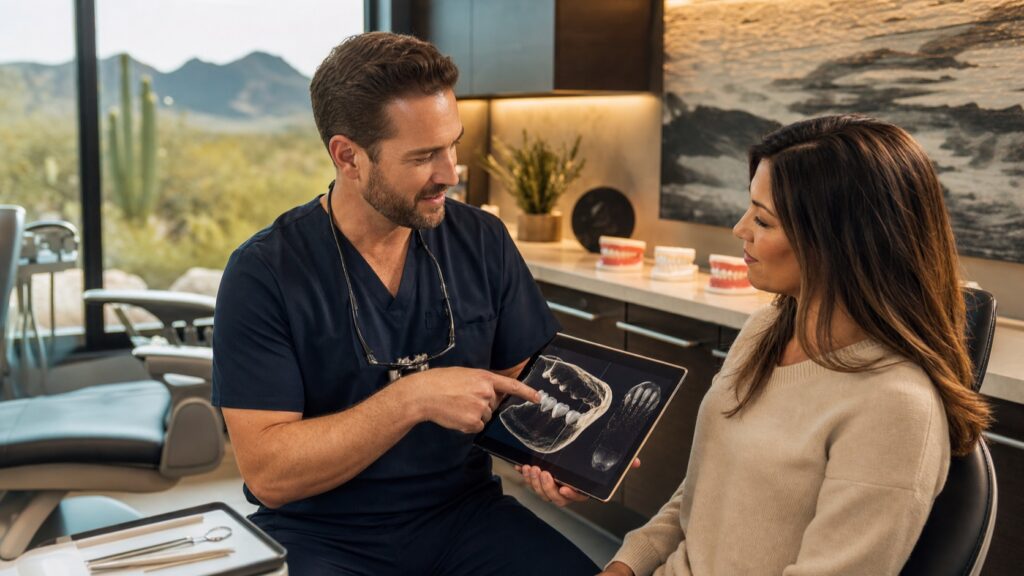
AI can make that better when it helps a dentist show a patient what is happening and why a recommendation makes sense. It can also make things worse if the explanation sounds like a machine score. A patient does not only need the finding. They need context. They need options. They need the doctor to translate the image into plain English and connect it to their priorities.
This is why a dental practice should not bury its best explanations inside the operatory. If your dentist has a clear way of explaining crowns, implants, aligners, sleep dentistry, gum health, or second opinions, that explanation should live on the website, in short video clips, in FAQ posts, in email follow ups, and on a podcast feed patients can sample before booking.
The practices that earn trust are not the ones that sound the most technical. They are the ones that make a patient feel like the doctor has already answered the question they were nervous to ask.
Privacy And Proof Matter More
There is another reason dental practices need a more careful public voice around technology: privacy expectations are rising. In 2023, the FTC and HHS warned health providers about online tracking technologies that may share sensitive health information with third parties. Even when a dental practice is not trying to do anything reckless, modern marketing tools can create patient trust issues fast.
That does not mean dental practices should stop marketing. It means they should market with more proof, more restraint, and more clarity. Avoid magic claims. Avoid making AI sound like a replacement for the dentist. Avoid casual language around scans, symptoms, or outcomes that could make patients feel like their health data is just another retargeting signal.
A stronger approach is to explain the practice philosophy. Tell patients how the team thinks about technology, privacy, diagnosis, and consent. Show the human review process. Record the dentist talking through common concerns in a calm, premium way. Let a prospective patient hear that the practice is careful before they have to trust a treatment plan.
Listen to The Pod Bros Playbook
Get weekly insights on authority-building audio content for service professionals.
Browse EpisodesWhat Dentists Should Record Now
The best dental content does not start with a trend list. It starts with the questions your team answers every week. If your treatment coordinator hears the same objections during implant consults, that is a media topic. If parents ask the same aligner questions before orthodontic consults, that is a media topic. If patients are nervous about AI imaging, sedation, insurance, cost, second opinions, or whether a small problem can wait, those are all media topics.
Here is a practical starting library for a dental practice using AI in 2026:
- How we use AI assisted imaging. Explain what the tool supports, what the dentist reviews, and what the patient should look at on screen.
- What AI does not decide. Make it clear that treatment planning still depends on the doctor, the exam, symptoms, history, and patient goals.
- When to ask for clarification. Invite patients to ask about alternatives, timing, risk, cost, and what happens if they wait.
- How we protect patient information. Keep it simple, careful, and specific enough to build confidence without turning it into legal copy.
- What a good consultation feels like. Show how the practice slows down, explains images, and helps patients make informed decisions.
Notice that none of those topics require the dentist to become an influencer. They require the dentist to be clear. That is the part most practices underestimate. A calm ten minute conversation can become a podcast episode, three short clips, a website FAQ, a consultation prep email, and a local SEO asset. The value is not the microphone. The value is capturing the explanation once and using it everywhere patients make decisions.
How Pod Bros Turns Explanations Into Clients
At Pod Bros Media, we help authority based service businesses turn conversations into clients. For dental practices, that means building a repeatable content system around the doctor voice, not piling another random marketing task onto the office manager.
Our Scottsdale studio at 7555 E Osborn Rd, Suite 203, Scottsdale, AZ 85251 is built for this kind of work. A dentist can come in, answer the questions patients already ask, and leave with a clean authority library that supports the website, local search, social clips, and consultation follow up. If you want the Scottsdale podcast studio for a polished, low friction recording day, the whole point is to make the content feel easy for the doctor and useful for the patient.
The same approach works if your practice wants to record on a monthly rhythm. We help plan the topics, structure the conversation, capture the media, and turn the recording into assets that support acquisition and trust. You can see how the production system works on our process page, or explore broader podcast production services if you are building a more complete authority platform.
Human proof beats vague innovation. A patient does not need to hear that your practice is modern. They need to hear a real dentist explain how modern tools help them make a safer, clearer decision.
Ready to turn patient questions into trust?
If your dental practice is using AI, adding services, or trying to stand out in a crowded local market, we can help you build a simple recorded content system around the explanations patients already need.
Book a Free SessionScottsdale, Phoenix, and Arizona service professionals welcome.
FAQ: Dental AI And Patient Trust
Why should dentists using AI create more patient education content?
Because AI can speed up workflow, but it does not automatically create confidence. Patients still want to understand what the dentist saw, what judgment was applied, and what the next step means for them.
What kind of AI topics should a dental practice explain publicly?
Start with simple patient facing topics: how imaging tools support the dentist, what the tool does not decide, how the practice protects health information, and what questions patients should ask before treatment.
Can a dental podcast help with local patient trust?
Yes. A short recurring show gives patients a repeatable way to hear the doctor explain care, values, process, and common questions before they book. That is especially useful in competitive Phoenix and Scottsdale search results.
Does this replace reviews and local SEO?
No. Reviews, local SEO, and a strong Google Business Profile still matter. Recorded explanations make those signals stronger because they show the expertise behind the reputation.
How long should dental education episodes be?
Most practices do not need long episodes. Ten to twenty minutes can cover one patient question clearly, then that same conversation can become short clips, website FAQs, email content, and consultation prep.
Where should Arizona dental practices start?
Start with the five questions patients ask before they say yes to treatment. Record the doctor answering them in plain English, publish the best clips, and connect them to the practice website and consultation flow.